Friday, September 08, 2006

(Sharp) Points to Review

My favorite rabble-rouser gabe has put up some pointers by John Updike on how to make a good book review (from Picked Up Pieces):

"My rules, shaped intaglio-fashion by youthful traumas at the receiving end of critical opinion, were and are:

1. Try to understand what the author wished to do, and do not blame him for not achieving what he did not attempt.

2. Give him enough direct quotation--at least one extended passage--of the book's prose so the review's reader can form his own impression, can get his own taste.

3. Confirm your description of the book with quotation from the book, if only phrase-long, rather than proceeding by fuzzy precis.

4. Go easy on plot summary, and do not give away the ending. (How astounded and indignant was I, when innocent, to find reviewers blabbing, and with the sublime inaccuracy of drunken lords reporting on a peasants' revolt, all the turns of my suspenseful and surpriseful narrative! Most ironically, the only readers who approach a book as the author intends, unpolluted by pre-knowledge of the plot, are the detested reviewers themselves. And then, years later, the blessed fool who picks the volume at random from a library shelf.)

5. If the book is judged deficient, cite a successful example along the same lines, from the author's ouevre or elsewhere. Try to understand the failure. Sure it's his and not yours?To these concrete five might be added a vaguer sixth, having to do with maintaining a chemical purity in the reaction between product and appraiser. Do not accept for review a book you are predisposed to dislike, or committed by friendship to like. Do not imagine yourself a caretaker of any tradition, an enforcer of any party standards, a warrior in an idealogical battle, a corrections officer of any kind. Never, never (John Aldridge, Norman Podhoretz) try to put the author 'in his place,' making him a pawn in a contest with other reviewers. Review the book, not the reputation. Submit to whatever spell, weak or strong, is being cast. Better to praise and share than blame and ban. The communion between reviewer and his public is based upon the presumption of certain possible joys in reading, and all our discriminations should curve toward that end."

Personally, I concur with the said pointers but I also like the style of jp and skinny (especially his real-time review of Jeff Vandermeer's Shriek: An Afterword found here).

Wednesday, September 06, 2006

A Cute Little Mouse Told Me...

So you wanna know how [identity-protected] looks like?

Definitely cute.

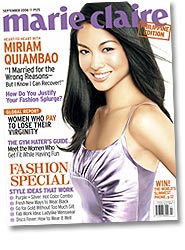
But if you really wanna know, check out the latest issue of Marie Claire.


Where is she there? Ah, now that would be making it easy for you. (And no, that's not her on the cover!)

Monday, September 04, 2006

Denial of Service

(Or, another plea for book-lovers and book-hunters...)

Sometimes you get lucky, sometimes not. For this month, it was three out of three with the latter.

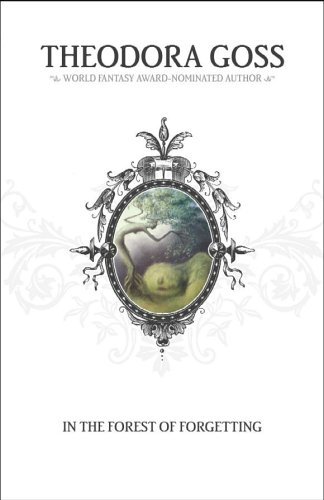
Despite a month-long sale in bookshops, I didn't have enough time (nor money) to pick up a copy of Theodora Goss' short story collection In the Forest of Forgetting in Powerbooks. I've liked Goss' writing ever since I read a story of hers "Miss Emily Gray" in David Hartwell's yearly fantasy's best collection. Later on, I grew envious when I heard dean had picked up a copy. It didn't help that a hesitant skinny had bought the book and was converted. Was it the prose? The story? Who knows. Goes to show that it must have been good though.

That's one:

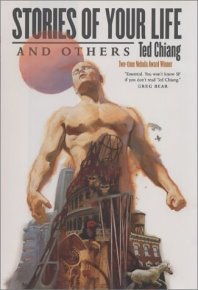
Prior to this, I found out that copies of SF writer Ted Chiang's well-received short story collection Stories of Your Life and Others had been put up on a local online auction and were quickly snatched up. Wow, I didn't even know Chiang had a fanbase in this country. Given that a number of Chiang's stories had either been nominated or won awards already-- and Chiang had been cited waaaay back together with Kelly Link (my favorite writer) as one of two writers to look out for-- and I've never read a piece by him at all... Well, aren't those enough reasons to read his stuff?

That's two:


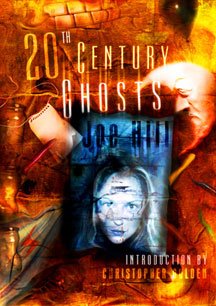
Obviously, I seem to be on a hunt for short-story collections. But it doesn't help these collections are hard to find even abroad. A case in point: upcoming horror-writer Joe Hill had recently won the Bram Stoker award for his short-story collection 20th Century Ghosts and I thought of ordering a copy from Booktopia. (Of course it helps that Hill is one of the horror's best/worst-kept secrets: Hill is the son of horror-meister Stephen King but never advertised this fact.) Imagine my surprise when I found out that this was sold-out and was only available 2nd-hand at a hefty price-tag. Yowza.

That's three:

So if anyone out there knows where I can pick up a copy of the above books (barring ordering from abroad), maybe you can help a poor cat out?

UPDATE (9/6/2006): Can you spare a dime for a cat?

Unbelievable.

I just found a copy of Goss' book tucked away in Powerbooks Shangri-la. And this after I called up them and found out from them that all copies were sold out. The ironies of life being what they are, unfortunately now I don't have the cash to buy it.

Grrr.

Friday, September 01, 2006

Ex Libris: More than Meets the Eye

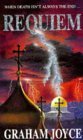
I was supposed to pick up a copy of Graham Joyce’s Requiem at my favorite bookstore, Booktopia, last night but Robert wasn’t in. Next time, I suppose.Normally, I don’t like getting multiple copies but this was one time that I thought I’d break my rule. This book was actually my first entry to Joyce’s writing and I figured getting the shop’s copy-- which had Joyce’s autograph-- was a good way to celebrate his writing. It also helped that my earlier copy was a UK-edition with a lousy cover.
Strangely enough, one thing I like about Joyce’s books is that I can never know what to expect when I read them. For example, Requiem is the story of a husband grief-ridden with the loss of his wife. Deciding to get away from it all, he visits an old friend in Jerusalem and—in the course of discovering what may be a number of never-before-seen Dead Sea scrolls—finds himself haunted by ghosts of his past as well as the city’s. But this doesn’t truly describe what Requiem is all about (which fits most of Joyce’s books I’ve read).

Moreover, I read this while lounging on a beach in Puerto Galera, sitting in an Italian restaurant with sand sifting through my toes and listening to Mediterranean music wailing in the background. Suffice to say, I felt like I was sitting in a Middle-eastern café and the Wailing Wall was just a block away.

Another thing I found while reading Requiem was that it didn’t feel like it outright fantasy; rather this was my first introduction to ‘interstitial.’

This was evident in the next book I read, Smoking Poppy, which I thought was a paean to fathers and their children. In this book, a working-class stiff finds out his daughter has gone missing in Thailand and goes in search for her together with his estranged son (who had gone religious) and his obnoxious drinking buddy. This book with rather sympathetic characters reminded me of a kind of mystical Apocalypse Now.

Likewise, this was one book that touched me so much that I felt like crying afterwards. Later on, I gave a copy to my dad as a birthday gift. Given how it was my dad who introduced me to the joys of reading, that says quite a lot.
Indigo, on the other hand, was even an odder duck of a story. A young man discovers a father he never knew has died. He also finds out about his old man's research into the properties of the color indigo—and the road that ultimately leads to madness. Suffice to say, I thought once again how one must never expect when reading a Joycean novel.
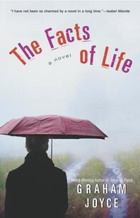
On the other hand, I suffered a misimpression with The Facts of Life: I thought it was centered on a character, a child born out of wedlock to a fey girl. Instead,it's really a British family trying to live their lives during and in the aftermath of World War 2. Fortunately, Joyce had an excellent handle on the characters and his story was exceptionally poignant without being maudlin. The fact that it had ghosts also helped.

Unfortunately, my honeymoon with Joyce came crashing down with the last book I read, his YA book TWOC (a carjacking term meaning to “take without consent”). Though the concept and the opening was interesting (about a boy whose brother had earlier died in a car crash and how he appeared to him), I found the story rather formulaic and managed to predict the ending.

Despite this misstep, I love Joyce's books and consider him one of my favorite authors. I've already mentioned his hard-to-peg stories, his empathic characters, and his strong characterizations. However, Joyce also writes excellent prose to help the story along, embedding in the story and the work-a-day writing a turn of a phrase that would knock you out for a loop.

As another fantasist, Jonathan Carroll, once opined, "Graham Joyce writes the kind of novels we keep hoping to find, but rarely do."

I quite agree.

P.S. This wasn't in the wild but if anyone's interested, I saw Fully-Booked Rockwell has a copy again of M.J. Harrison's Anima (which collects Signs of Life and Course of the Heart).

Enjoy!

Monday, August 28, 2006

I'm Too Young for This Shit

Ouch.

Just when I think I got a handle on this thing called Life, it throws me a fastball that makes me go "huh?"

Last Saturday morning, I woke up with a really bad pain at my lower right back that I first thought was a muscle pain but couldn't shake off. It got so bad that I asked my mom to bring me to the hospital (the nearby Medical City). At the emergency room, the attending doctor told me that it didn't seem like it was a burst appendix so they wanted to conduct a urinalysis test and a CBC first.

While waiting for the results, the pain seemed to have receded but later traveled to my abdomen. Then things got a little excruciating when the pain in my abdomen started a duet with the pain in my lower right back.

It eventually passed but to be on the safe side, Aljay (fortunately, he was on call at the emergency room at that time) called for a painkiller and anti-acidic medicine. I was out like a light for an hour or two. When I woke up, I found out the results: I had a stone in my kidney with some infection.

A check with the ultrasound revealed no obstruction and I was later able to go home that same day. I figured that whatever stone I had I managed to pass during that rather critical time late in the day.

Geez, kidney stone at my age? Whatever next?

Friday, August 25, 2006

Another Reason to Make Myself a Pauper

For andrew who asked and leigh who answered:

There was a time, in my childhood, when, perhaps because I had been raised among books and booksellers, I dreamed of becooming a novelist.

The root of my literary ambitions, apart from the marvelous simplicity which one sees things at the age of five, lay in a prodigious piece of craftmanship and precision that was exhibited in a fountain-pen shop on Calle Anselmo Clave, just behind the Military Government building.

The object of my devotion, a plush black pen, adorned with heaven knows how many refinements and flourishes, presided over the shop window as if it were the crown jewels. A baroque fantasy magnificently wrought in silver and gold that shone like the lighthouse in Alexandria, the nib was a wonder in its own right.

When my father and I went out for a walk, I wouldn't stop pestering him until he took me to see the pen. My father declared that it must be, at the very least, the pen of an emperor.

I was secretly convinced that with such a marvel one would be able to write anything, from novels to encyclopedias, and letters whose supernatural power would surpass any postal limitations...

From Carlos Luis Zafon's A Shadow in the Wind.

Seen in the wild:

Here are a few books I've seen in 2nd-hand bookshops...

  • A hardbound of Michael Swanwick's novel, Bones of the Earth;
  • What could be Iain M. Banks' last Culture novel, Look to Windward (mmpb, a bit battered);
  • A reprint of Maxwell Grant's The Shadow (which I can't remember the title);
  • Another reprint of Sax Rohmer's Fu Manchu (also can't remember the title); and
  • Several reprints of Capt. W.E. Johns' Biggles adventure series.

Wonder what's with all the reprints of the old pulp series?

Tuesday, August 22, 2006

Perspectives from the Spec Fic Barricades


I was going through an old discussion thread on one of my favorite books, Guy Gavriel Kay's Tigana and it got me thinking about something that's in the news lately, i.e. what's the difference between a freedom fighter and a terrorist? Is there one?

I'm sure there's no easy answer to this question. As one Austin Powers movie astutely pointed out, any bad guy will always have family and friends waiting for them to come home. On the other hand, someone in the said discussion pointed out that the characters in GGK's book were cold-blooded in sacrificing home and hearth in order to fight for "nebulous things" like freedom and statehood.

Granted that such concepts may seem important for you now-- but when it does happen, would your loved ones agree when they find themselves dying due to your actions? Would you still feel the same when it's your own betrayal and death you're facing?

Thanks to my own country's history of being conquered before by other nations, I found myself reading Laura Resnick's In Legend Born, which dealt with a kingdom's efforts to throw off the yoke of its imperialist conquerors. Though it was marred by bad pacing, I thought Resnick's depiction of a people suborned by their neighbors and finding ways to fight back using their inherent sorcery and secret martial arts (like our very own arnis or eskrima) as pretty realistic.

Moreover, Resnick's own protagonists were faced with the question of how bloody would (and should) they go in winning their freedom. Is it right to torture the enemy soldiers? Or to slay civilians despite the fact that they're part of the conquering force? How degraded should one be in order to get your message across?

On the other hand, Steven Erikson's Deadhouse Gates dealt with the other side of the coin. In this book, the Empire of Malaz is faced with rebellion by its tributary nations. As the imperial forces withdraw from these counties, the Malazan people living there are faced with fleeing through hostile territory, arid deserts, and tribes out for their blood. Despite the fact that they were the conqueror firsts, one can't help but root for the Malazan as their soldiers make each sacrifice count in order to get their beleaguered people home safely.

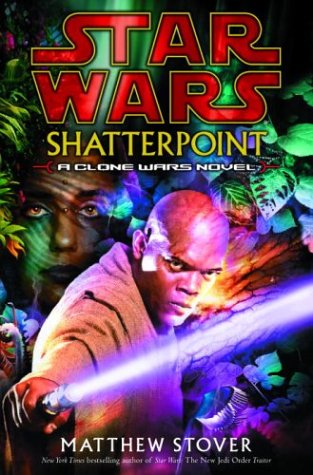
Last but not least, in a homage to Joseph Conrad's Heart of Darkness and Francis Ford Coppola's Apocalypse Now (and despite its Star Wars tag), Matthew Stover's Shatterpoint posited about the consequence when peacekeepers are forced to make war (i.e. they lose) and how guerilla low-level intensity conflicts sometimes becomes genocidal in scope. Very dark, very depressing and very good in making one think. If you would have to kill everyone in order to win the war, would you do it?


So what's my point? I don't have one, really. Like I said, questions like these have no easy answers. However, a conversation one night with a Marxist friend of mine made me circumspect about making absolute proposals. In our talk, he posited the idea that what the Philippines needs is a revolution akin to the United States or France. Playing devil's advocate, I asked him if he was willing to have the blood of thousands on his hands. He answered: if it's for the good of the country, he would.

Myself, I'm not so sure. Who knows what we would do when faced with such darkness.

Monday, August 21, 2006

Talking Down the Horror


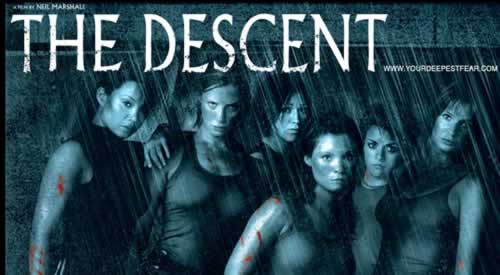
Some interesting discussion over one of my favorite movies, The Descent. Though I gotta warn ya, it's loaded with spoilers so don't read it if you haven't seen it.

And you really have to see it (together with director Neil Marshall's other great film, Dog Soldiers).